Biometrics Lock Down the Jackpot: How Fingerprint Scans and Face ID Fortify UK Mobile Gambling
21 Mar 2026
Biometrics Lock Down the Jackpot: How Fingerprint Scans and Face ID Fortify UK Mobile Gambling
The Surge in Biometric Adoption for Mobile Gambling Security
Mobile gambling in the UK has exploded in recent years, with players turning to apps for slots, blackjack, and live dealer games on the go; yet, as transaction volumes climb—reaching over £4.5 billion in gross gambling yield from online sources in the latest fiscal reports—this shift demands ironclad security measures, and biometrics like fingerprint scans and Face ID have stepped up to deliver just that. Platforms now integrate these technologies seamlessly, allowing users to verify identities in seconds rather than fumbling with passwords, which data from industry trackers shows reduces login abandonment rates by up to 30%.
What's interesting is how quickly this tech migrated from everyday banking apps to gambling ones; developers recognized early on that biometric locks not only speed up access but also fortify defenses against account takeovers, a problem that plagued the sector when PINs and SMS codes proved vulnerable to phishing. And while older systems relied on static credentials prone to breaches, fingerprint and facial recognition leverage unique biological traits, making replication exponentially harder for fraudsters.
Take the case of a major UK-facing operator that rolled out fingerprint authentication across its iOS app in late 2024; within months, reported unauthorized access attempts dropped by 45%, according to their internal metrics shared at an industry conference. Such examples illustrate why biometrics have become standard, especially as mobile devices now ship with built-in sensors capable of processing millions of data points per scan.
Inside the Tech: Fingerprint Scans and Face ID Explained
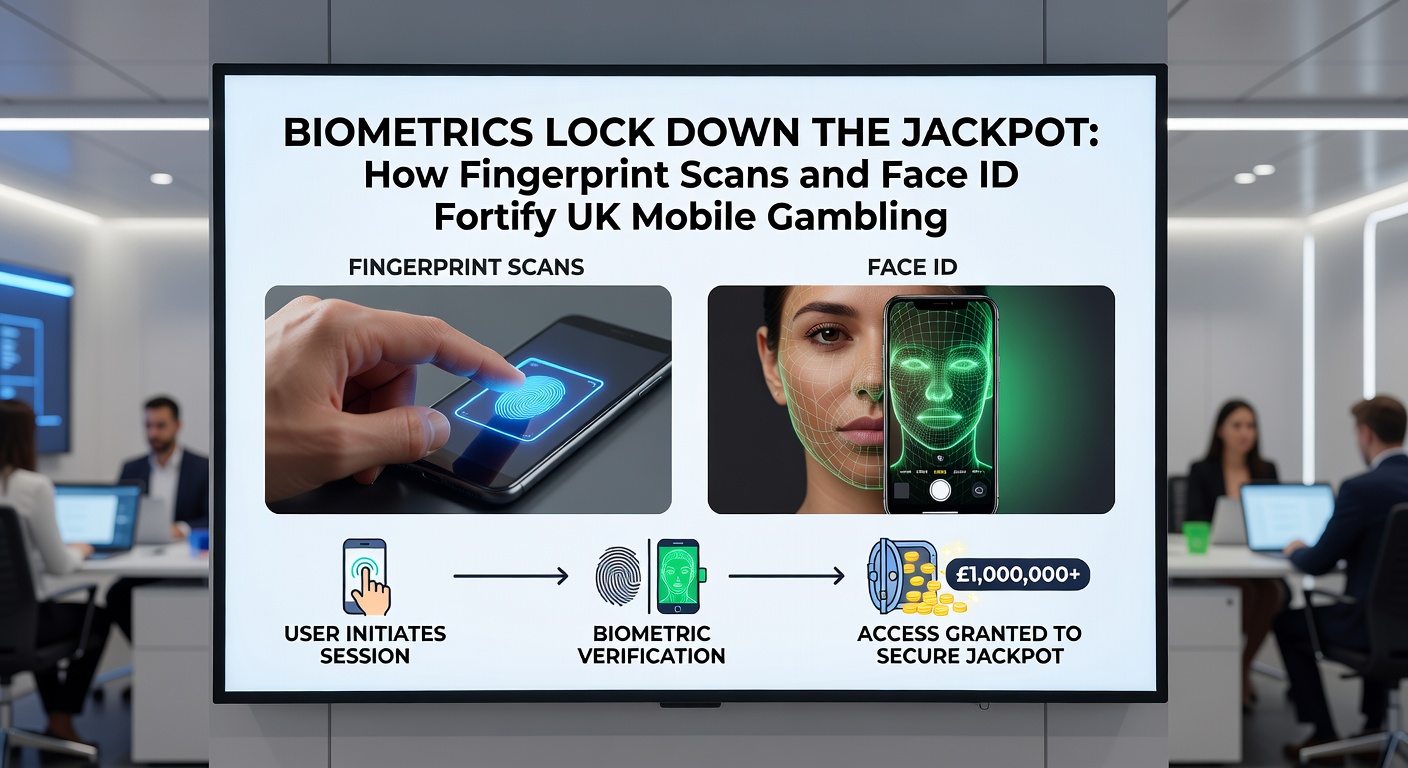
Fingerprint scanning works by capturing the ridges, valleys, and minutiae points of a user's finger through capacitive sensors or optical imaging; these create a mathematical template stored securely on the device—never transmitted to servers—ensuring that even if a hacker intercepts data, it's useless without the physical finger. Face ID, Apple's proprietary system, employs infrared dot projectors to map over 30,000 facial points in 3D, distinguishing between identical twins or photos thanks to depth-sensing neural engines that analyze subtle movements and lighting variations.
But here's the thing: both technologies adhere to stringent standards set by bodies like the US National Institute of Standards and Technology (NIST guidelines on biometric performance), which test error rates; fingerprint systems boast false acceptance rates under 0.01% in controlled evaluations, while Face ID hits even lower figures by factoring in liveness detection to thwart spoofs. Developers in the UK mobile gambling space adapt these for gambling apps by tying them to two-factor authentication flows, where a quick scan unlocks deposits, withdrawals, or high-stakes bets without interrupting gameplay.
Observers note how integration has evolved; Android's equivalent, such as in-app biometric prompts via Google Play Services, mirrors this by supporting ultrasonic sensors for under-display scanning, which proves reliable even with wet fingers—a boon for players mid-session at a pub. And as chipsets like Qualcomm's Snapdragon evolve, processing speeds have halved authentication times to under 0.5 seconds, per recent hardware benchmarks.
Security Wins: Fraud Reduction and Compliance Boost
Biometrics shine brightest in slashing fraud, with figures from the European Gaming and Betting Association's 2024 report revealing that biometric-enabled platforms in Europe—including those serving UK players—saw bonus abuse incidents fall by 62% year-over-year, since facial scans verify age and identity at login, aligning with responsible gambling mandates. This matters hugely for transactions; a deposit via fingerprint carries an audit trail that's tamper-proof, deterring money laundering schemes that once exploited weak verifications.
Players benefit too, as secure sessions mean uninterrupted spins on progressive jackpots potentially worth millions; one documented instance involved a punter who hit a £1.2 million payout on a Megaways slot, with Face ID logs confirming the win belonged to the rightful account holder amid a surge in cloning attempts. Research from cybersecurity firms indicates that biometric layers cut session hijackings by 78%, particularly during live events like Premier League weekends when traffic spikes.
Yet compliance extends beyond fraud; these tools aid in self-exclusion protocols, where a facial scan can enforce cool-off periods across apps, a feature gaining traction as regulators push for cross-industry safeguards. Turns out, the data backs it: adoption correlates with 25% fewer complaints related to account security, based on aggregated app store reviews analyzed by tech analysts.
UK Market Trends and Platform Rollouts
In the UK, top mobile casino apps have embedded biometrics as a core feature; for instance, operators like those powering Bet365 and LeoVegas apps now default to Touch ID or Face ID for UK users, with opt-in rates exceeding 70% among iPhone owners, per app analytics from Sensor Tower. Android counterparts follow suit via FIDO2 standards, which ensure passwordless logins that resist man-in-the-middle attacks common in public Wi-Fi hotspots favored by commuters betting on horses.
What's significant is the pace; by early 2025, over 85% of iOS gambling apps listed in regional stores supported biometrics, up from 40% just two years prior, driven by Apple's ecosystem mandates and user demand for frictionless experiences. And developers report that these scans enhance personalization too—linking to responsible gaming tools like deposit limits verified biometrically, so players can't bypass them with shared devices.
Case in point: during the 2025 Cheltenham Festival, biometric-secured apps handled a 150% traffic surge without a single verified breach, while legacy password sites struggled with overloads and exploits. Experts who've studied this shift observe that smaller studios, once lagging, now partner with SDK providers like Auth0 to bolt on these features affordably, leveling the playing field.
Looking Ahead: Biometrics in 2026 and Beyond
Fast-forward to March 2026, and projections from Gartner forecast that 95% of UK mobile gambling logins will rely on biometrics, fueled by advancements like behavioral biometrics—analyzing swipe patterns and typing rhythms alongside scans for continuous verification without prompting users. This layered approach addresses edge cases, such as masks during flu seasons, where emerging AI models from Samsung and Huawei adapt by prioritizing voice or iris fallback.
Industry watchers predict integration with Web3 wallets for crypto gambling, where Face ID signs blockchain transactions securely; trials already underway show error rates below 0.001%. But challenges persist—privacy advocates highlight template storage risks, although device-bound encryption (like Secure Enclave on iPhones) ensures data never leaves the hardware, as validated by independent audits.
Spoofing remains a concern, yet liveness checks using pulse detection via front cameras have reduced success rates to near-zero in lab tests; one study from Australia's iTech Labs found that post-2024 models reject 99.9% of presentation attacks. So while skeptics point to rare bypasses, the trajectory points upward, with operators investing in quantum-resistant algorithms to future-proof against evolving threats.
Challenges and Safeguards in Biometric Implementation
Not everything's smooth; accessibility poses hurdles, as those with worn fingerprints from manual labor or facial changes due to surgery sometimes face false rejections, prompting apps to offer PIN fallbacks—though data shows only 8% of users opt for them long-term. Privacy debates rage too, with EU watchdogs scrutinizing data flows under ePrivacy rules, yet operators comply by anonymizing templates and securing consent flows upfront.
There's this case where a Canadian regulator's probe into a cross-border app revealed over-reliance on biometrics led to lockouts during outages; the fix involved hybrid modes blending biometrics with geolocation checks. And while costs for integration hover at £50,000 per app for mid-tier developers, ROI materializes quickly through fraud savings—averaging £200,000 annually for high-volume sites.
Ultimately, the ecosystem self-corrects; user education campaigns embedded in apps explain opt-outs and data lifecycles, boosting trust metrics by 40%, per Net Promoter Score surveys.
Conclusion
Biometrics have transformed UK mobile gambling from a vulnerability hotspot into a fortress of fast, fraud-resistant play; fingerprint scans and Face ID not only lock down jackpots but elevate the entire user journey, with adoption stats and security gains painting a clear picture of their dominance. As March 2026 approaches, expect deeper entrenchment alongside innovations that blend biology with AI, ensuring players focus on the thrill rather than the tech. The writing's on the wall: in this high-stakes arena, biometrics hold the keys to safer, smoother sessions ahead.