1 Jun 2026
Inside the Algorithms: How Recommendation Engines Personalize Game Suggestions for British Mobile Gamblers
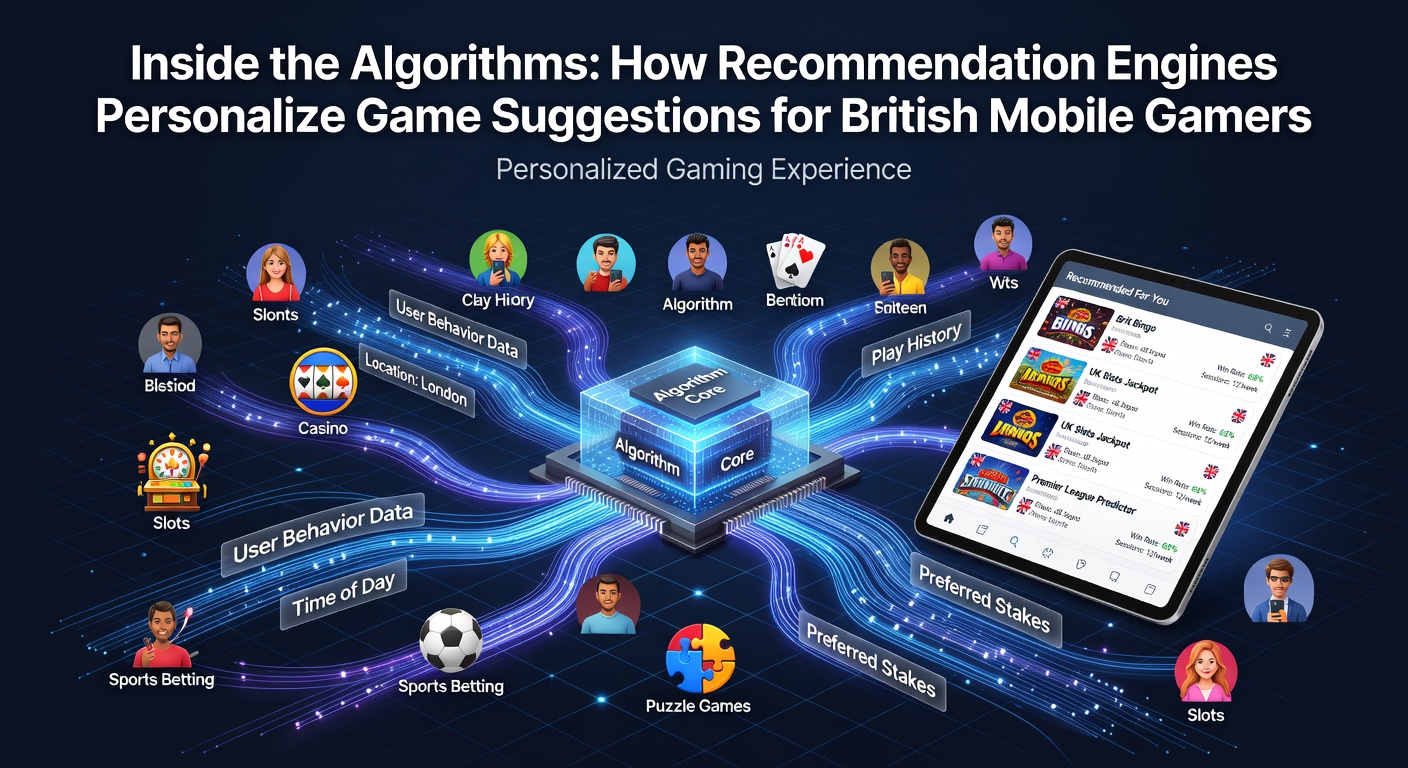
British mobile gambling platforms rely on recommendation engines that process vast datasets to tailor game suggestions for individual users, drawing from patterns in play history, session duration, and device interactions. These systems combine multiple algorithmic approaches, including collaborative filtering that compares user behaviors across large populations with content-based methods that match game attributes to past selections. Observers note that such engines operate continuously, updating suggestions in real time as new data arrives during a session.
Data Inputs Driving Personalization
Platforms collect signals from login times, bet sizes, preferred game categories, and even pause points within titles to build profiles, while location data from UK networks refines outputs for regional preferences like slots versus table games. Researchers at institutions such as the University of Nevada's International Gaming Institute have documented how these inputs feed into machine learning models that predict future engagement with high accuracy. And yet the process avoids static rules, instead adapting through feedback loops where ignored suggestions trigger adjustments within minutes.
Take one developer who integrated hybrid models combining user similarity scores with item metadata, resulting in suggestion lists that shift based on time of day or device orientation. Data from industry reports shows that such personalization correlates with extended session lengths across European markets, including Britain, where mobile access dominates.
Algorithm Types in Action
Collaborative filtering dominates early stages by grouping players who share traits, such as frequent roulette spins, then proposing titles popular within that cluster, whereas content-based systems analyze game mechanics like volatility or theme to align with explicit preferences stored in user accounts. Hybrid frameworks merge both, reducing the cold-start problem for new accounts by incorporating demographic details and device usage patterns. What's interesting is how these engines handle edge cases, like recommending live dealer options to users who previously favored digital variants after a series of similar choices.
Integration with Mobile Features
Push notifications and in-app carousels serve as primary delivery channels, with algorithms prioritizing items that match calculated affinity scores above a threshold determined through A/B testing on control groups. Experts have observed that integration with operating system features, such as background refresh on iOS and Android, allows seamless updates without user intervention, keeping suggestions current even during brief connectivity drops. In June 2026, several platforms rolled out enhanced versions incorporating cross-device syncing, enabling continuity between phone and tablet sessions based on synchronized profile data.

Industry Benchmarks and External References
Figures from the European Gaming and Betting Association indicate that recommendation-driven interfaces now appear in over 70 percent of major mobile offerings across the continent, with British operators adopting similar structures to maintain competitive positioning. These systems undergo periodic audits for fairness in suggestion distribution, though the focus remains on engagement metrics rather than outcome guarantees. One study revealed that players exposed to tailored lists completed more game trials within the first week compared to those receiving generic displays, highlighting the measurable effects of algorithmic curation.
But here's the thing: external factors like network latency or app version can influence how quickly updates propagate, prompting developers to implement caching strategies that maintain suggestion quality offline. Those who've studied deployment logs often discover that peak personalization accuracy occurs during evening hours when data volumes surge.
Future Adjustments in Algorithm Design
Developers continue refining models to account for seasonal variations, such as increased table game interest around major sporting events, using reinforcement learning techniques that reward suggestions leading to sustained interaction. Academic sources point to ongoing work at research centers in Australia and Canada exploring privacy-preserving methods, like federated learning, that process data locally on devices before aggregation. Such approaches aim to balance personalization depth with data minimization principles required in various jurisdictions.
Conclusion
Recommendation engines in British mobile gambling form a core component of user interfaces, processing behavioral signals through layered algorithms to generate context-aware suggestions that evolve with each interaction. Data from multiple regions shows consistent patterns in how these tools shape discovery, while technical refinements scheduled through 2026 and beyond promise tighter integration with emerging device capabilities. Observers continue tracking these developments as platforms refine the balance between relevance and variety in their outputs.