27 May 2026
UK Gambling Commission Delays Full Rollout of Financial Risk Assessments
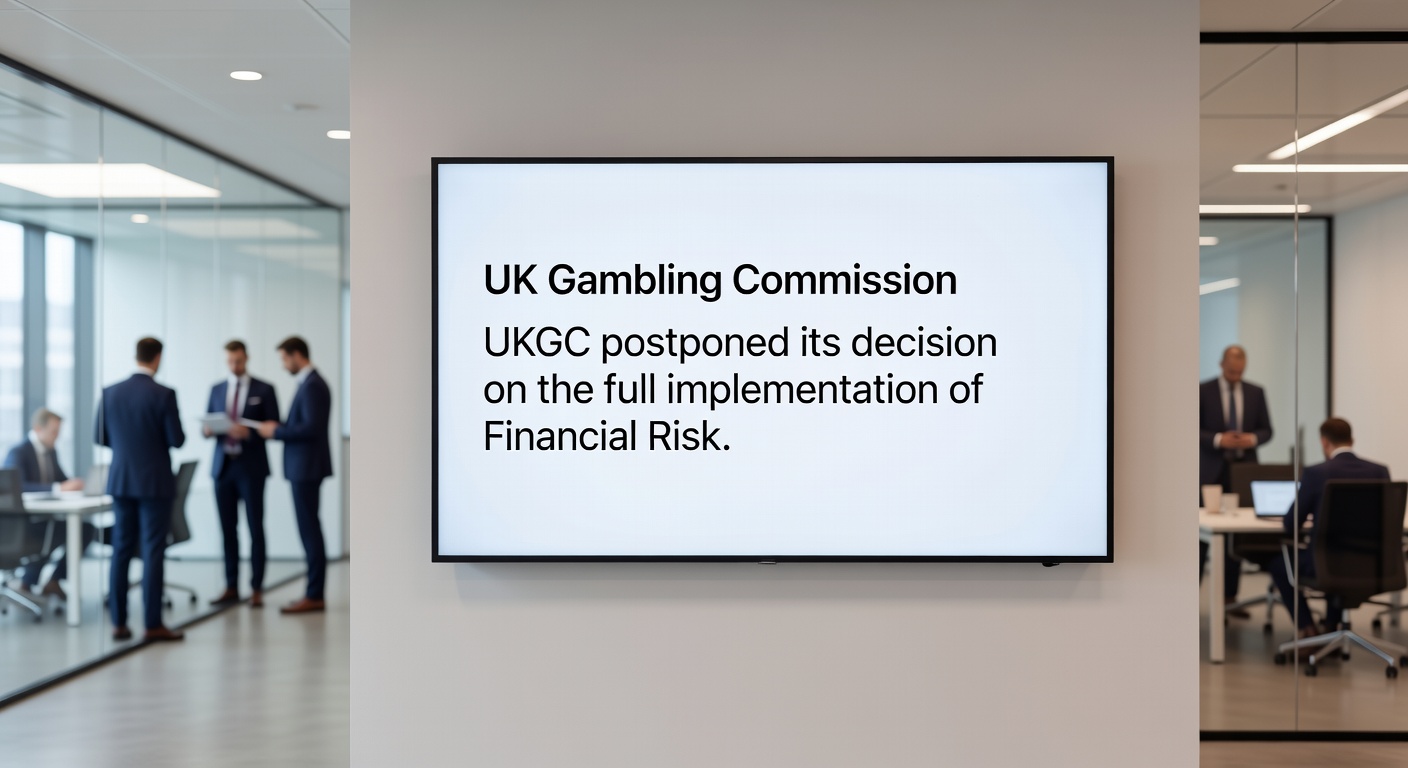
 The UK Gambling Commission has put off its decision on rolling out Financial Risk Assessments across the sector after the board convened on 21 May 2026; regulators reviewed pilot evidence yet stopped short of completing their evaluation and issued no new timeline for implementation. The assessments trace back to the 2023 Gambling Act white paper, where they were positioned as tools to flag financial risk indicators without introducing hard spending limits. Observers note the pilot generated a substantial body of data, but officials stated they needed additional time to weigh every element before moving forward. Industry voices and political figures have raised points around customer friction, questions over data accuracy, and the possibility that stricter checks could push activity toward unregulated channels.
Origins of the Financial Risk Assessments
Financial Risk Assessments emerged from the white paper reforms as a way to monitor player finances at key thresholds, with operators expected to gather information on income and spending patterns once certain triggers appeared; the approach avoided blanket caps and instead focused on identifying elevated risk profiles through targeted reviews. The pilot phase allowed selected operators to test the process on real accounts, producing records that covered friction points, verification success rates, and any shifts in player behaviour during the trial period.
Regulators collected this material over several months, then presented summaries to the board for discussion on 21 May 2026; the meeting concluded without a final ruling on nationwide application because assessors had not finished their full review of the dataset.
Board Meeting Outcome and Current Status
Following the May session, the Commission released a brief statement confirming the postponement, noting the volume of evidence under consideration and the absence of a revised schedule; stakeholders now await further updates without a fixed date for the next decision point. Those tracking the process have pointed out that the regulator emphasised ongoing analysis rather than any change in policy direction at this stage.
Concerns Raised by Industry and Political Figures
Opposition has centred on several practical issues, including the potential for increased customer drop-off when verification steps interrupt play sessions, doubts about the reliability of income data sourced from third parties, and warnings that tighter controls might accelerate movement to offshore or illegal sites. Operators have shared examples from the pilot where some players abandoned accounts after repeated information requests, while others completed checks without issue, creating uneven outcomes across different customer segments.
Political commentary has echoed these points, with calls for clearer safeguards to protect legitimate play while still addressing problem gambling indicators; no formal vote or legislative change has been proposed in response, leaving the focus on the Commission's internal assessment timeline.
Implications for Operators and Players
Operators currently operating under the pilot framework continue to apply the assessment protocols on a limited basis, which means select high-risk accounts still receive reviews even as the wider rollout remains on hold; this interim arrangement allows data collection to proceed while the Commission completes its evaluation. Players in the pilot group have encountered varying levels of interaction, from simple income declarations to more detailed bank statement uploads, depending on the thresholds triggered during their activity.
The lack of a new timetable means companies cannot yet plan system-wide changes or budget for expanded compliance teams, creating a period of uncertainty that some have described as a holding pattern until clearer guidance arrives. Data gathered so far continues to feed into the ongoing review without public release of detailed findings at this point.
Next Steps and Ongoing Review
Commission staff have indicated they will continue examining pilot results alongside feedback from operators and other interested parties, with the goal of producing a complete assessment before any further board consideration; until that work finishes, the status quo on full implementation persists. The regulator has not signalled any intention to abandon the assessments entirely, only to ensure the evidence base supports whatever decision emerges next.
Conclusion
The postponement announced after the 21 May 2026 board meeting leaves Financial Risk Assessments in a state of continued evaluation rather than immediate expansion, with the Commission citing incomplete analysis of pilot materials as the primary reason for delay. Industry and political concerns over friction, data quality, and black market displacement remain on record as the review process moves ahead without a published schedule for resolution.